A Quick Overview of Ball Valves
The current industrial process and our daily lives have benefited greatly from the wealth of modern industry. In fact, there is a wide range of valve types available to satisfy the ever-increasing demands. The hydraulic control valve, among the numerous varieties, has played an essential role in water regulation. Read this article for more info about how to get the valves for your pipe systems from a reputable industrial valves manufacturer.
The hydraulic control valve is the valve that regulates the pressure. It consists of a main valve and related accessories such as a catheter, pilot valve, needle valve, ball valve, and pressure gauge in general. Manufacturers would build several types of hydraulic control valves based on the various operating functions and working situations in order to meet certain standards. There are many more subdivided species, for example. They include floating ball valves with remote control, reduction valves, check valves, flow control valves, and pump control valves, among others. The following sections discuss the information for two specific valves that have been categorized by the structure.
Despite their differences in form, both types operate on the same principle, which is the pressure differential. One is referred to as the diaphragm type, while the other is referred to as the piston type. The diaphragm or piston would be activated by the high-performance butterfly valve. The water’s force would then begin to change the main valve’s device, causing it to be completely open, closed, or under regulation. Or, to put it another way, it can be stated as follows. When water from above the piston or diaphragm is poured into the lower area, the pressure there is greater than in the upper area. The primary valve’s device is currently pushed to its maximum open position. The device, on the other hand, would be completely shut down. When the pressure is in the middle range, the valve controls the flow. Whatever the case may be, the valve will be able to perform under the pressure differential if all of the parts work together correctly.
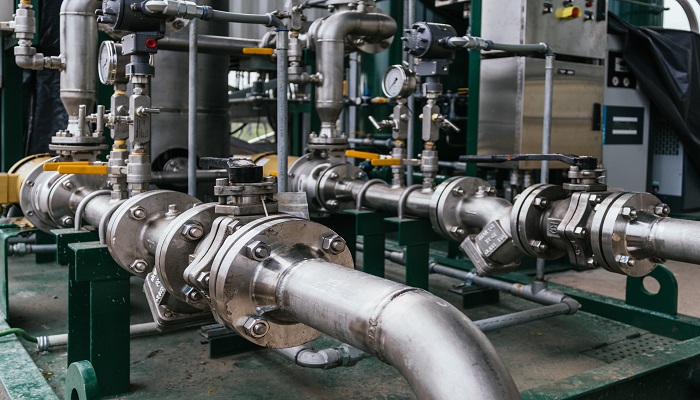
To achieve their precise specifications and functions, valves are often separated into many categories. Now we’ll take a closer look at the china metal seated ball valve. A ball valve, like other valves, is typically used to control flow. The main component is a spherical disc that regulates the flow through it.
In the middle of the sphere, there is a hole or port. In fact, the valve’s two ends determine a great deal. Flow occurs when the two ends of the valve are in line. When the valve is closed, the hole is perpendicular to the valve’s ends, preventing flow. Keeping the handle or lever in line with the port location will help a lot during this operation.
Ball valves are widely employed in industry due to their adaptability and wide range of supporting pressures and temperatures, as well as their ease of operation. Sizes typically range from 0.5 to 30 centimeters. Metal, plastic, or metal with a ceramic center are the most common body materials. The ball is frequently chrome coated to increase durability and ensure that the valve shuts off precisely.
Ball valves are further categorized into many varieties in order to meet specific industrial requirements. Single body, three-piece body, split body, top entry, and welded are the different body kinds. To put it another way, the classification is based on the number of valve parts. Despite the fact that valves come in a variety of shapes and sizes, they all operate in the same way. There are also a variety of forms when it comes to the bore of the ball mechanism.
Full port, reduced port, V port, trunnion, and cavity filler ball valves are available. Furthermore, manually operated ones can be swiftly closed. Some are also fitted with an actuator, which can be pneumatic or motor-driven. A positioner is frequently included with these valves. It will be much easier for it to convert the control signal into actuator position and valve opening as a result of this. Multi-port ball valves, for example, typically have four or more ways. They’re also available for purchase. The operation of spinning a single lever 4-way ball valve to drive air-powered motors from forward to reverse is also performed. What’s more, one-piece ball valves are virtually typically decreased bore, which are relatively cheap and usually discarded. Two-piece ones, on the other hand, have a slightly decreased (or standard) bore and can be thrown away or repaired.